Measurement data summarised from independent testers. TV performance varies by panel lottery and calibration. We may earn commissions from retailer links. Data verified April 2026.

For Gaming

OLED vs QLED for Gaming 2026: HDMI 2.1, Response Time, and the Real Winners

For most gamers in 2026, OLED wins. 0.1ms response time, perfect blacks that make dark game environments pop, and LG's 5-year burn-in warranty remove the old objections. For marathon gamers with static HUDs running 8+ hours daily, Mini-LED is the safer call.
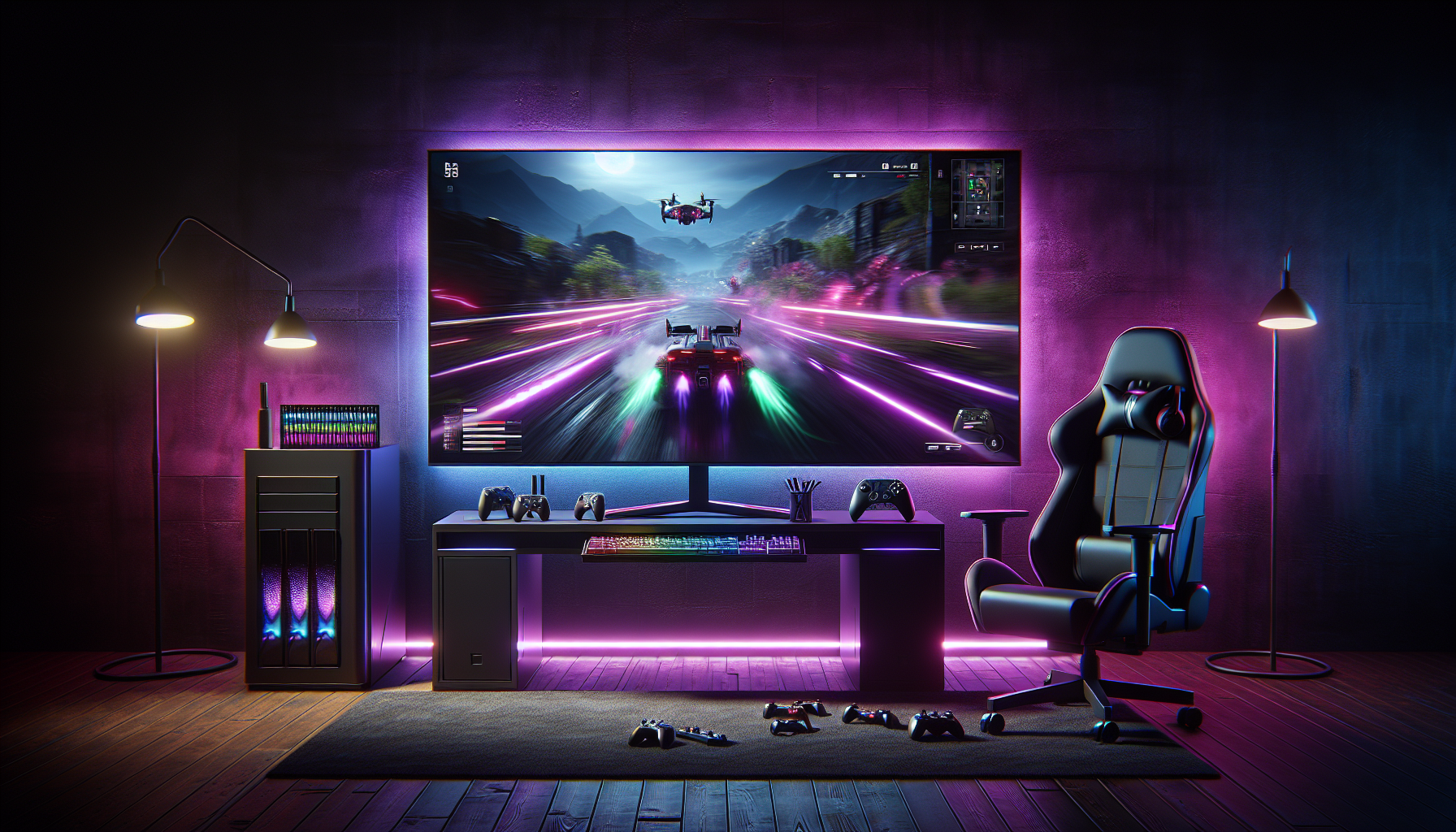
OLED gaming setup with fast motion and RGB lighting
OLED for gaming when
  • Fast-paced games where 0.1ms response matters
  • Dark game environments need perfect blacks
  • PS5 + Xbox + PC simultaneously (need 4 HDMI 2.1)
  • Dolby Vision Gaming wanted (LG C5/G5, Sony)
  • Normal varied gaming under 8 hours per day
Mini-LED when
  • MMORPG / strategy with permanent static HUD
  • 8+ hours daily gaming sessions
  • Bright room gaming setup
  • Absolute zero burn-in tolerance required
  • Budget under $1,200 (TCL QM8K is the pick)

HDMI 2.1 Spec Table: All 2026 Flagships

Input lag measured in Game Mode. VRR tested via HDMI 2.1. Data from Rtings-style independent testing. April 2026.

ModelPanelHDMI 2.1DV Gaming65" Price
LG G5WOLED4Yes$2,499
LG C5WOLED4Yes$1,499
Samsung S95DQD-OLED4No$2,699
Sony A95LQD-OLED2+2Yes$3,299
Sony A80LWOLED2+2Yes$1,999
Samsung QN90DMini-LED4No$1,799
TCL QM8KMini-LED4Yes$999
Hisense U8KMini-LED2+2Yes$799

Why HDMI 2.1 Port Count Matters for Multi-Console Setups

A typical premium gaming setup in 2026 includes a PS5, an Xbox Series X, and a gaming PC or Apple TV -- three devices that all benefit from HDMI 2.1 bandwidth for 4K/120 output. The Sony A95L and A80L have only two HDMI 2.1 ports; the third device falls back to HDMI 2.0 (4K/60 only, no VRR). This is a practical limitation for multi-console setups.

LG G5, LG C5, Samsung S95D, Samsung QN90D, and TCL QM8K all have four full-bandwidth HDMI 2.1 ports. If you run multiple gaming devices, these are the practical choice over Sony's otherwise excellent panels.

Response Time vs Input Lag: What Actually Matters

Response time is how long a pixel takes to change colour. OLED achieves 0.1ms because organic compounds switch near-instantly. LCD-based Mini-LED achieves 2-8ms because liquid crystals take time to realign. The difference shows as trailing ghost images on fast-moving objects in competitive games.

Input lag is the time between a console sending a signal and the TV displaying the image. This is determined by the TV's processing pipeline and is significantly reduced in Game Mode. LG and Samsung flagship OLEDs measure 1.3-1.5ms in Game Mode. Sony's A95L measures 8-9ms even in Game Mode -- still excellent for single-player gaming, but perceptibly higher for competitive play.

Burn-In by Game Type

Action/shooter games (Call of Duty, Halo, FIFA)Small HUD, constantly changing content.
Very Low
Story games (God of War, Elden Ring, The Last of Us)Menu-heavy but not persistent static overlays during gameplay.
Very Low
Racing games (Gran Turismo, F1)Speed overlays are small and surrounded by dynamic track content.
Low
MMORPGs (WoW, FFXIV) with visible ability bars and minimapPersistent UI covering 20-30% of screen for multi-hour sessions.
Moderate
Strategy games (Civilization) with permanent map overlaysStatic full-screen elements for very long daily sessions.
Moderate-High
Paused game with static HUD left on for hoursMost practical cause of OLED gaming burn-in. Use auto-off timer.
High

Gaming TV Picks 2026

WOLEDBest Gaming TV

LG G5 OLED

1,500 nits peak

From $2,499

Check Price
WOLEDBest Value Gaming

LG C5 OLED

1,300 nits peak

From $1,499

Check Price
Mini-LEDNo Burn-In Gaming

Samsung QN90D

3,000 nits peak

From $1,799

Check Price

Gaming TV Questions Answered

Is OLED or QLED better for gaming in 2026?+
For most gamers in 2026, OLED is better. 0.1ms response time eliminates motion blur in fast-paced games. All flagship OLEDs support HDMI 2.1 with 4K/120Hz, VRR, and ALLM. The 5-year burn-in warranty on LG G-series removes the static HUD concern for most gaming styles. For marathon strategy gamers with permanent minimaps and HUDs (8+ hours daily), Mini-LED QLED is the safer choice with zero burn-in risk. The Samsung QN90D Mini-LED is the best anti-burn-in gaming TV.
What is HDMI 2.1 and do I need it for gaming?+
HDMI 2.1 is the cable and port standard that enables 4K at 120Hz (4K/120), variable refresh rate (VRR), auto low-latency mode (ALLM), and enhanced audio return channel (eARC). You need HDMI 2.1 if you own a PS5 or Xbox Series X and want 4K/120 gaming (which both consoles support in select titles). The number of HDMI 2.1 ports matters if you connect multiple devices -- the LG G5 has 4 HDMI 2.1 ports, the Sony A95L has only 2.
What is VRR and which TVs support it?+
VRR (Variable Refresh Rate) allows the TV and console/PC to synchronise frame rates dynamically, eliminating screen tearing and reducing stutter in games that do not maintain a locked frame rate. PS5 and Xbox Series X both support VRR via HDMI 2.1. Nearly all 2026 flagship TVs support VRR. The VRR range matters: LG G5 supports 20-144Hz (very wide, good for slow-frame performance mode games) while some TVs only support 48-120Hz.
Does OLED burn-in matter for gaming?+
For most gamers, no. Action games, sports games, and story games typically have dynamic content that does not trigger burn-in. The risk is specific to MMORPGs and strategy games with permanent static overlays running for 8+ hours daily. LG's 5-year G-series warranty covers burn-in if it does occur under normal use. If you play static-HUD games for many hours daily, consider Samsung QN90D Mini-LED instead.
What is the best TV for PS5?+
The best TV for PS5 in 2026 is the LG C5 65-inch at $1,499. It has 4 HDMI 2.1 ports (all 4K/120-capable), 0.1ms response time, 40-120Hz VRR, Dolby Vision Gaming support, and G-SYNC/FreeSync Premium compatibility. The LG G5 adds about 200 more peak nits and the 5-year burn-in warranty for $1,000 more.
What is Dolby Vision Gaming and which TVs support it?+
Dolby Vision Gaming enables game consoles to stream Dolby Vision metadata at 4K/120Hz, allowing dynamic tone mapping that responds to game scenes rather than using a static preset. LG TVs support Dolby Vision Gaming on C5 and G5. Sony supports it on A95L and A80L. Samsung TVs do not support any Dolby Vision format, using HDR10+ Game Mode instead.

Data verified April 2026. Input lag and response time from Rtings-style measurement. Port counts from manufacturer specifications.