For Sports and Bright Rooms
Best TV for Sports and Bright Rooms: Mini-LED QLED Wins, With Caveats
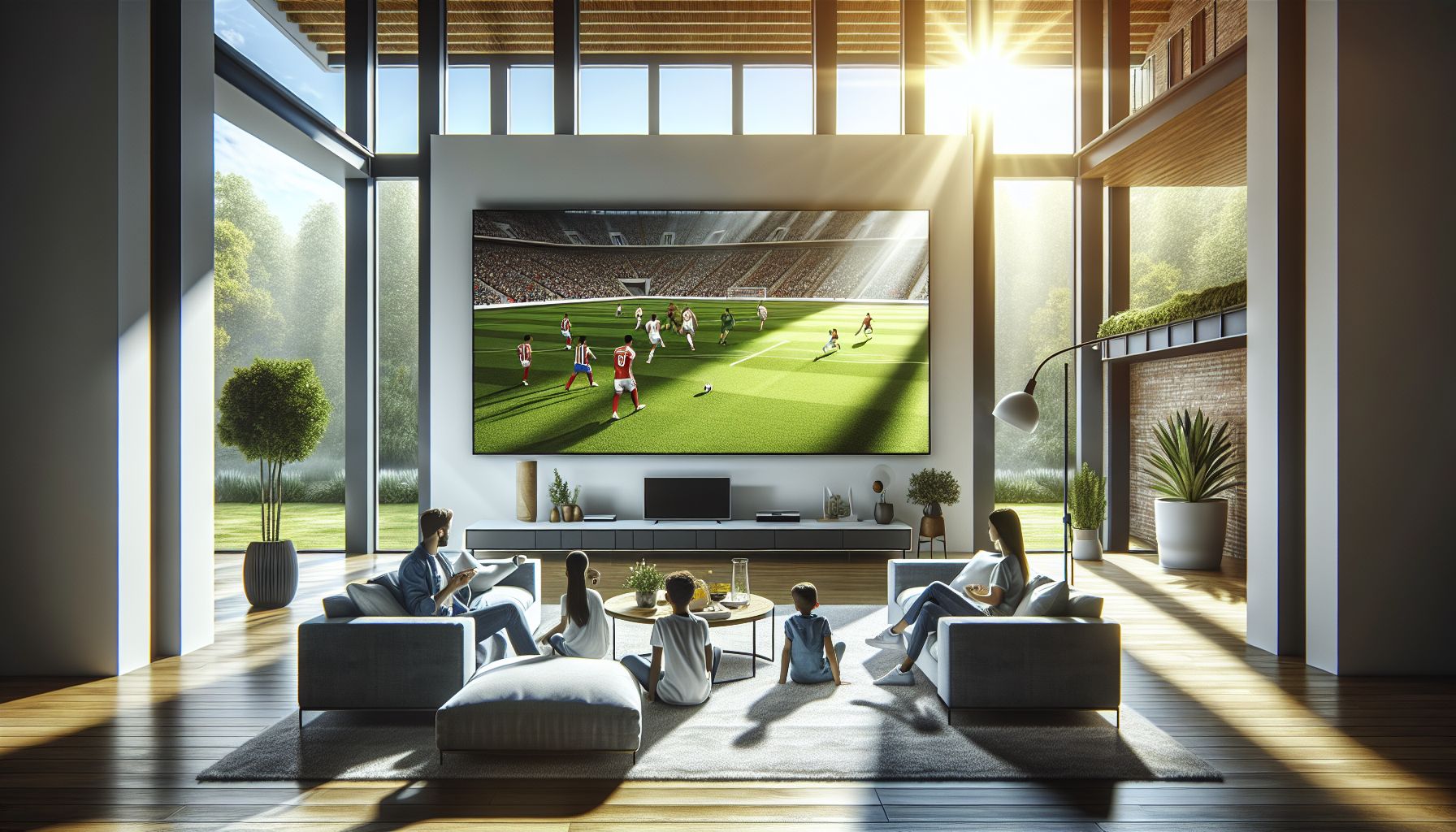
For sports-heavy viewing in a room with windows, Mini-LED QLED is the right answer. TCL QM8K and Samsung QN90D fight glare with 3,000-4,000 peak nits. If your room is moderately bright, modern QD-OLED with Samsung's matte anti-reflective coating is a valid compromise.
The Verdict
Room brightness is the primary variable. Sunlit room or conservatory: TCL QM8K or Samsung QN90D, no contest. Mixed room with afternoon sun: Samsung S95D QD-OLED (matte coating + 2,000 nits is the best compromise). Moderately bright room for evening sports: any flagship OLED is fine.
Why Bright Rooms Are Hard for OLED
OLED panels use automatic brightness limiting (ABL) to manage panel temperature and power consumption. When a large portion of the screen is bright (a sports broadcast with 70% of the frame being a lit pitch), ABL reduces overall panel brightness significantly. The LG C5 measures 1,100-1,300 nits in a small 10% window, but drops to 200-280 nits when the full panel is displaying a bright scene. That 200-280 nits is what you see during an afternoon football match.
A room with windows receiving afternoon sun can have ambient brightness of 300-800 lux, which means a TV outputting 200-280 nits full-field will look noticeably washed out. Mini-LED's 700-1,000 nits full-field maintained output is significantly brighter, which is why the perceived image quality advantage is so clear in daylight conditions.
Additionally, LG's OLED panels use a semi-gloss anti-reflective coating that reflects ambient light sources (windows, room lights) as near-mirror images, further reducing perceived contrast and clarity in bright rooms. Samsung's matte coating on the S95D and QN90D diffuses these reflections, reducing their impact significantly.
Anti-Glare Coatings: The Spec Nobody Talks About Enough
Motion Handling for Sports
Sports require fast motion handling. A football crossing a pitch, a puck moving across ice, a Formula 1 car banking through a corner -- these all move faster than a standard TV's 60Hz refresh can capture without blur. The key specs for sports motion are native refresh rate, black frame insertion (BFI), and panel response time.
For 2026, all flagship TVs run 120Hz native panels, which is sufficient. Black frame insertion reduces motion blur by inserting black frames between content frames, effectively doubling the perceived motion clarity, but at the cost of some brightness reduction and potential eye strain for sensitive viewers. Mini-LED TVs handle BFI slightly better than OLED because their higher base brightness compensates for the brightness reduction.
Motion interpolation (the "soap opera effect" where content is made to look like a home video at 200Hz) is a different feature and almost universally disliked for cinema. For sports, some viewers prefer it. All TVs can run without it, and for sports purists, TruMotion/MotionFlow/Motion Clarity settings should be set to "Clear" or disabled for a natural look.
Scenario-Based Recommendations
Sunlit conservatory, all-day sports
Buy: TCL QM8K or Hisense U8K
Maximum brightness, matte coating, no contest. Budget friendly.
Living room with afternoon window glare
Buy: TCL QM8K or Samsung QN90D
Mini-LED brightness plus matte coating for daytime viewing.
Mixed room, afternoon glare + evening movies
Buy: Samsung S95D QD-OLED
Matte coating handles the daytime glare. QD-OLED blacks handle evening cinema. Best compromise.
Dim room, mainly evening sports
Buy: LG C5 OLED or Samsung S95D
In a dark room OLED's motion clarity and colour saturation make sports look exceptional.
Sports bar or commercial installation
Buy: TCL QM8K or Samsung QN90D Mini-LED
Zero burn-in risk from persistent overlays. Brightness handles ambient light.
Sports and Bright Room Picks 2026
Sports and Bright Room Questions Answered
Is OLED or QLED better for sports?+
What TV is best for a bright room?+
Why does full-field brightness matter for sports?+
Does OLED look good for sports?+
What is the best anti-glare TV in 2026?+
Data verified April 2026. Anti-glare ratings based on Rtings reflection handling measurements. Prices are indicative.